
India's foreign exchange reserves have surged by $12.42 billion, reaching a new all-time high of $729.33 billion for the week ended August 21, driven by increases in foreign currency assets and gold reserves.

Indian benchmark indices, Sensex and Nifty, experienced a significant downturn as escalating tensions in West Asia led to a sharp surge in crude oil prices, coupled with fresh foreign fund outflows and a weakening rupee.

The Bharatiya Janata Party received nearly Rs 1,473 crore at its central headquarters alone during the last five state assembly elections, more than seven times the Rs 207 crore in net receipts reported by the Congress across its central and state units, according to expenditure statements filed with the Election Commission.

ICICI Bank has successfully raised $1 billion through a five-year senior unsecured US dollar bond, marking its first public dollar bond issuance since 2017 and the largest single-tranche US dollar bond issuance by an Indian issuer so far this year.

The BRICS summit in New Delhi brings together leaders from major emerging economies to address global challenges like trade disputes, geopolitical upheavals, and the economic impact of conflicts in Ukraine and West Asia. India, as chair, aims to position BRICS as an economic growth engine, focusing on the Global South's food, energy, and supply chain security. The summit also highlights the grouping's expansion and its growing influence in global governance.

India's remittance inflows have remained robust despite the West Asia conflict, driven by precautionary transfers and diversification of remittance sources, with bankers expecting continued stability for the year.

Staff Sergeant Geri Gideon Hanghal was a resident of Nof HaGalil and a soldier in the Kfir Brigade's Nahshon Battalion, the Israeli Army said.

India's cement industry is on the brink of an oversupply situation as aggressive capacity expansion by major players is set to outpace demand growth over the next two financial years, potentially leading to pricing pressures and moderated utilisation rates.

Indian benchmark indices Sensex and Nifty closed largely flat on Monday, recovering from early losses, as escalating tensions in West Asia and a sharp rally in crude oil prices weighed on investor sentiment, despite resilience in IT and consumer durables stocks.

The Calcutta High Court has appointed a retired judge as a special officer to manage the day-to-day expenses of the Mamata Banerjee-aligned Trinamool Congress (TMC) from three debit-frozen bank accounts. The accounts were frozen following a complaint by a rival TMC faction alleging they held proceeds of crime. The court allowed transactions for party expenses and legal costs, noting that the initial freezing lacked specific material basis and that the complainant had previously benefited from these accounts.

The Reserve Bank of India (RBI) net bought $561 million in June, marking its first net purchase since February, following three consecutive months of net sales. This move coincided with a series of government and RBI measures to attract foreign capital, leading to a 0.36 per cent appreciation of the rupee against the dollar.

Moody's Ratings has sharply increased India's GDP growth forecast for fiscal 2026-27 to 7 per cent, making it the fastest among G20 economies, driven by economic resilience despite the Middle East conflict. However, the agency flagged significant inflation risks stemming from elevated oil prices and potential El Nino disruptions.

The investigation into the murder of pharmaceutical trader Vineet Manocha has intensified, with his son Subrat now under police scrutiny. New evidence reveals that the alleged shooter made multiple calls to Subrat from a newly purchased SIM card. While Subrat's wife Shalu and two others are already arrested, police are examining call detail records and financial affairs to uncover Subrat's potential involvement in the conspiracy.

India and China are in what experts call 'a cooperation-versus-competition situation'.

'Value is not where you make money in India. It never has been.' 'You have to buy momentum.' 'Momentum is in technology, and I don't see that slowing down because I believe the AI infrastructure boom is going to last for a while.'

Indian companies' overseas expansion plans are holding strong despite geopolitical tensions in West Asia, driven by structural factors like supply-chain diversification, free trade agreements, and market expansion, according to Ajay Sharma, managing director and head of banking at HSBC India.

'I don't really expect the August increase in food prices, which was close to 6 per cent, to persist as we go close to the end of this year.'

A stake sale by Tata Trusts will help it to have a larger corpus that could be used to balance the unequal dividends that flow from Tata Sons on an ongoing basis.

Axis Bank has opened 50 new branches across India, while Abakkus Mutual Fund has surpassed Rs 10,000 crore in AUM. YES Bank launched a new credit card for women, and J&K Bank partnered with HDFC Life to enhance its insurance offerings, showcasing significant growth and strategic developments in the Indian financial sector.

The Enforcement Directorate has frozen bank deposits of the Trinamool Congress worth Rs 440 crore under the anti-money laundering law. This action follows searches in a funds misappropriation case, with allegations of significant transfers to a private aviation company and the purchase of luxury aircraft.

For India, the goal is not simply to host another grand diplomatic gathering. It is to prove that a diverse coalition of emerging powers can still deliver.

The merged InsuranceDekho-RenewBuy entity aims to significantly expand its distribution network across India, offering insurance, mutual funds, and loans, with a strong focus on 'Bharat' (rural India), according to CEO Ankit Agarwal.

The Centre has spent 28 per cent of its FY27 capital expenditure budget of Rs 12.21 trillion in the first three months against around 24.5 per cent during the corresponding period a year ago.

Ahmedabad Cyber Crime Branch has uncovered a Rs 1.5 crore WhatsApp fraud, leading to the arrest of two key SIM and OTP suppliers in West Bengal. The investigation revealed a sophisticated international cybercrime network spanning China, Pakistan, India, and Hong Kong, operating a "boss scam" and utilizing a "Cybercrime as a Service" model. Police recovered a significant portion of the defrauded amount and secured thousands of devices.

'India was the emirate's largest international source market by hotel guest volume.'

'India is vulnerable to the West Asia crisis in three ways: Energy costs, the business Indian companies conduct in the region, and remittances from the Indian diaspora.'

State-owned Bank of Baroda (BoB) has agreed to pay $600 million (about 5,700 crore) to settle litigation arising from the collapse of NMC Health, ending years of cross-border legal proceedings.

The question for the next 20 years is not whether India can become a $5 trillion or $10 trillion economy. Those are attractive targets, but the real question is whether India can create enough productive jobs, educate its children properly, make its cities liveable, and give hundreds of millions of people a substantially better life, asserts Ramesh Menon.

A stolen mobile phone belonging to an 88-year-old man has helped the Delhi police unearth an interstate cyber-fraud syndicate allegedly operating through a three-stage network spread across Rajasthan and Uttar Pradesh, an officer said on Monday.

West Bengal Chief Minister Suvendu Adhikari announced that the first phase of fund transfers under the 'Annapurna Yojana' will begin on June 3, with eligible women beneficiaries receiving Rs 3,000 directly in their bank accounts.
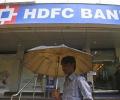
HDFC Bank reported an 8.04 per cent increase in its March quarter consolidated net profit to Rs 20,350.76 crore, but highlighted potential near-term risks for small-business borrowers due to the West Asia conflict. The bank's CEO also addressed the recent resignation of its non-executive chairman and hinted at a potential top-level reorganisation.

Indian listed companies experienced their fastest revenue growth in 15 quarters during Q1FY27, with combined net sales rising 18.4% year-on-year, while net profit grew 16%, primarily driven by mining, metals, and banking sectors, despite a contraction in operating margins due to higher input costs.

India's foreign exchange reserves saw one of their largest weekly expansions, surging by USD 14.136 billion to reach USD 707.002 billion during the week ended August 7, according to the Reserve Bank of India.
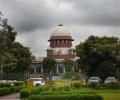
The Supreme Court has listed for hearing on August 31 an appeal of Sumit Roy, personal assistant to Trinamool Congress MP Abhishek Banerjee, challenging the August 6 order of the Calcutta high court denying him pre-arrest bail in the Salboni land-grabbing case.

India has removed a key regulatory hurdle, allowing exporters to receive payments in Indian currency while retaining incentives under the country's foreign trade policy, a move aimed at promoting wider use of the rupee in international trade.

Indian benchmark indices, Sensex and Nifty, closed almost flat in choppy trade as investors remained cautious due to ongoing uncertainty in West Asia, relentless foreign fund outflows, and anticipation of the RBI's monetary policy decision.

Indian benchmark indices Sensex and Nifty experienced declines in early trade, driven by a surge in Brent crude oil prices above USD 91 per barrel due to escalating tensions between Iran and the US, alongside an increase in US 10-year bond yields. Track Sensex, Nifty on August 18.

Lack of women in Karnataka's new council of ministers has put the spotlight once again on women's under-representation in politics and policy.

The World Bank has affirmed India's strong position to withstand the current global energy shock, citing high foreign exchange reserves, fiscal space, and low inflation as key buffers supporting continued growth despite international headwinds.

England midfielder Morgan Rogers is an ideal signing for Chelsea and could form an exciting partnership with midfielder Cole Palmer, new manager Xabi Alonso said on Monday.
